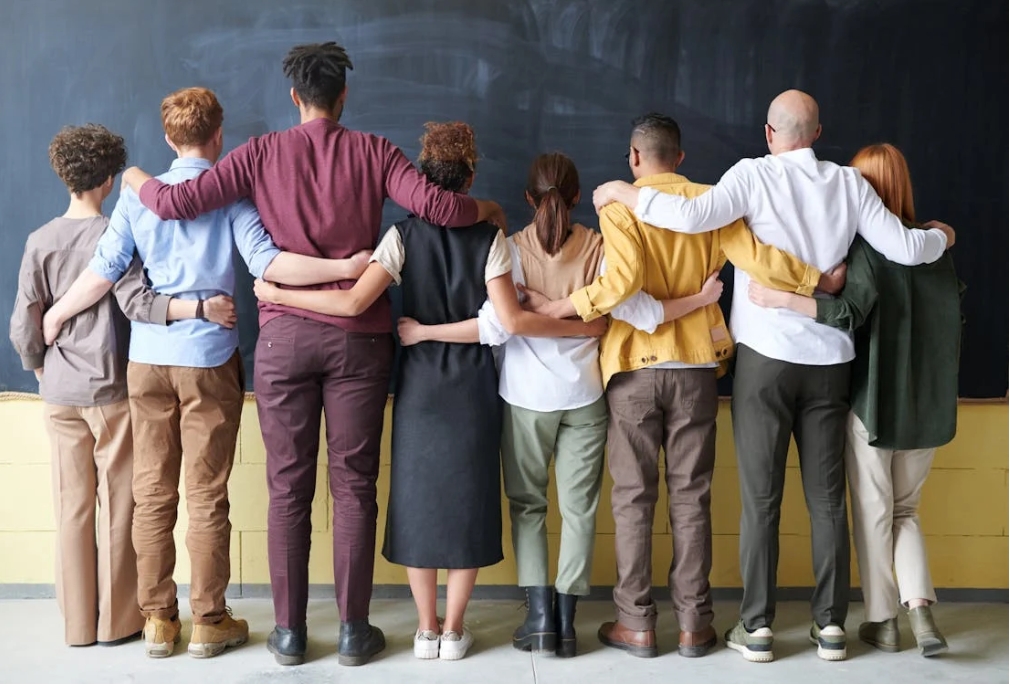
UMB faculty, staff, and students led and shaped the 2026 Dialogue Symposium, advancing dialogue across difference through improv, intercultural facilitation, embodied practice, and healing.
The University of Maryland, Baltimore (UMB) was well represented at the 2026 Dialogue Symposium, hosted by the Center for Social Justice Dialogue at the University of Maryland, Baltimore County (UMBC). The symposium convened facilitators, scholars, students, and practitioners committed to strengthening dialogue across difference.
From shaping the event’s vision to leading dynamic sessions, UMB staff and students played a visible and meaningful role throughout the symposium.
UMB Leadership on the Planning Committee
UMB’s impact started long before the first session. Planning committee members included:
- Sam Anderson, assistant director, Student Leadership and Engagement, UMB
- Chloe Kastner, MSW candidate, Leadership, Policy, and Social Change, University of Maryland School of Social Work (UMSSW)
Through their service on the planning committee, Anderson and Kastner helped design a symposium grounded in experiential learning, accessibility, and dialogue. Their leadership ensured that the event reflected both institutional partnership and student voice. Kastner played a pivotal role in the symposium’s quick transition from an in-person event to a fully remote event because of the late-January snowstorm, coordinating panelists and various logistical components of the symposium.
UMB-Led and UMB-Connected Sessions
“Yes, And: Using Improv and Nonviolent Communication as Dialogic Tools”
Facilitator: Ebony Nicholson, LMSW, SHRM-CP, civic and community engagement specialist, UMB
Nicholson led an interactive session exploring how improvisational principles and nonviolent communication (NVC) can strengthen engagement across difference, deepen collaboration, and enhance leadership capacity.
Participants were invited to:
- Apply the improv principle of “Yes, and …” alongside NVC practices
- Explore possibilities and brainstorm change in the context of common higher education
- Generate ideas, identify next steps, and move conversations forward
- Engage with curiosity and care
The session integrated core improv foundations: presence, adaptability, collaboration, and affirmation, with compassionate communication techniques rooted in empathy and clarity. Participants practiced observing without judgment, identifying emotions and needs, and making actionable requests. Through embodied dialogue activities, they strengthened their ability to listen, respond, and co-create meaning in real time.
Dialogue Across Difference: Honoring Cultural Context and Exploring Facilitator Identity
Presenter: Shekinah Davis, manager of training and data strategy, UMSSW
Davis facilitated a dynamic blend of reflection, instruction, and hands-on practice centered on intercultural communication and facilitator identity.
The session opened with an identity-based warm-up inviting participants to reflect on how their cultural backgrounds and communication habits shape their facilitation style. A focused overview of key intercultural communication concepts, paired with real-world examples and reflective dialogue, helped participants connect theory to lived and professional experience.
Participants then engaged in a structured activity highlighting unspoken cultural norms and common communication misalignments. A guided debrief surfaced insights about identity, interpretation, and facilitation choices.
Attendees left with:
- Concrete strategies for leading dialogue across cultural differences
- Practical facilitation tools
- Greater awareness of how identity influences dialogue dynamics
Dialogue in Action: Embodied Practices That Bring Conversation to Life
Presenter: Thomas Northrup, psychodramatist and MSW student, Leadership and Policy, UMSSW
Co-Presenters:
- Kimberly Dailey, Co-CEO, Dailey Innovations, Inc.
- Cathy Nugent, LCPC, TEP, board-certified trainer in psychodrama, sociometry, and group psychotherapy
Northrup brought embodied practice into the dialogue space. After learning about the symposium through Kastner, his collaborator in UMSSW’s Student Leadership Coalition, he applied to share his experience using the Morenian Triadic System.
The workshop centered on a powerful premise: To feel safe in a group, individuals must understand who they are in relation to others. Making implicit social connections explicit builds trust.
Through experiential exercises grounded in psychodrama and sociometry, participants explored how relational awareness, presence, and the body itself prepare groups for meaningful dialogue.
Transforming Stories, Transforming Selves: Narrative Change and Racial Healing for Dialogue Practitioners
Presenters:
- Uday Sharad Joshi, neighborhood fellow, Center for Restorative Change, UMSSW
- Eric N. Ford, executive director, The Shriver Center at UMBC
This session guided participants through the structure and purpose of Truth, Racial Healing, and Transformation (TRHT) healing circles, emphasizing healing and relationship over debate or persuasion.
Grounded in shared agreements and embodied presence, the facilitators traced the origins of TRHT as a framework for dismantling the false hierarchy of human value based on race. Through teaching, modeling, and participation in a mini-healing circle, attendees experienced how carefully structured storytelling centers equal voice, deep listening, and emotional truth-telling.
The session reinforced that healing circles are an ethical and foundational practice, held with care and consent, that prepares individuals and institutions for authentic dialogue and sustained racial equity work.
Uday reflected that the symposium’s emphasis on healing and racial equity was particularly resonant. The recognition that meaningful dialogue requires addressing deep individual and collective wounds aligns closely with UMSSW’s commitment to supporting urban Black, Indigenous, and People of Color (BIPOC) children and adolescents in Baltimore City, whose well-being depends on spaces that foster dignity, connection, and healing.
Shared Commitment
Across planning, facilitation, and presentation, UMB voices helped shape a symposium grounded in courage, reflection, and community accountability.
From improvisational affirmation and compassionate communication to culturally grounded facilitation to embodied relational practice to narrative change and racial healing, UMB’s presence at the 2026 Dialogue Symposium reflected a collective commitment to dialogue as preparation for ethical leadership, authentic partnership, and long-term social transformation.
Sam Anderson, Shekinah Davis, Uday Sharad Joshi, Chloe Kastner, and Thomas Northrup contributed to this story.