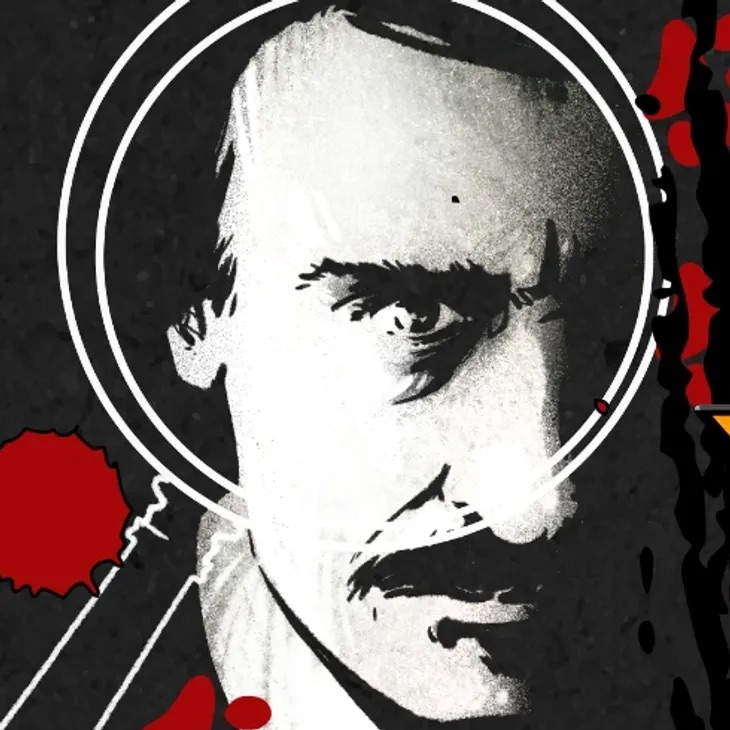
Before Sherlock Holmes, Hercule Poirot, Nancy Drew, Columbo, Scooby-Doo, and every brilliant investigator who ever faced an impossible case, there was C. Auguste Dupin. Introduced in Edgar Allan Poe’s “The Murders in the Rue Morgue” in 1841, Dupin became literature’s first detective, and Poe’s tale became the first great locked-room mystery: a brutal crime, a baffled police force, and one strange genius able to see what everyone else had missed.
Poe did more than invent the detective. Across “The Murders in the Rue Morgue,” “The Mystery of Marie Rogêt,” “The Purloined Letter,” “The Gold-Bug,” and “Thou Art the Man,” he helped create the machinery of modern mystery: the eccentric investigator, the loyal narrator, the clue hidden in plain sight, the puzzle solved through reason, the cryptogram, the false trail, and the final revelation.
Poe Baltimore, The Poe Museum (Richmond, Va.), Enoch Pratt Free Library, and the NSA's National Cryptologic Museum present a new exhibit at Westminster Hall, 519 W. Fayette St., celebrating Poe’s invention of the detective and his lasting influence on mystery, crime-solving, codebreaking, and popular culture. Led by The Poe Museum, the exhibit brings together first printings, rare artifacts, interpretive panels, and interactive experiences that invite visitors to follow Poe’s clues across the stories that launched a genre. For more information on the exhibit, which runs Oct. 1-4, visit Poe Baltimore.