The intersection of American culture and these marriages are at a center of a new book authored by University of Maryland School of Social Work researchers.
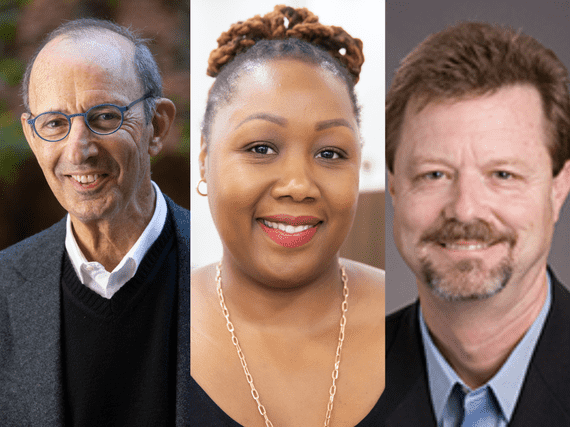
Authors and researchers Geoff Greif, Victoria Stubbs, and Michael Woolley
During America’s 250 years, love seems to have conquered all, but relationships and democracy both require work to be everlasting, especially for interracial and interethnic couples.
The intersection of American culture and these marriages are at a center of a new book authored by University of Maryland School of Social Work researchers.
America’s history is filled with cultural flashpoints and violence where race and ethnicity are front and center. The June 12, 1967, landmark decision, Loving v. Virginia, struck down state laws banning interracial marriage, and nearly 60 years later, some couples continue to be judged.
From 2020-2025, these married partners living through events like the murder of George Floyd, or Asian American, Pacific Islander, and Jewish hate crimes arising from COVID-19 and extreme rhetoric, among others, forced interracial and interethnic couples to understand what their partners experience as they wrestled with the rest of the world for acceptance.
“Despite what's been going on in the country for the last five years, they're optimistic,” said Geoffrey L. Greif, PhD, MSW, distinguished university professor emeritus at the University of Maryland School of Social Work (UMSSW). “They think their marriages are going well."
In a newly released book that builds upon their published research, “Interracial Marriage: How Diverse Couples Navigate Relationships in a Divided Time,” Greif, along with private clinician and UMSSW instructor Victoria D. Stubbs, LICSW, LCSW-C, RMT, and retired UMSSW professor Michael E. Woolley, PhD, interviewed over 150 married interracial and interethnic couples and surveyed 428 people about navigating their relationships from 2020 to 2025.
Released by Columbia University Press, the book examines how couples navigate identity, race, parenting, politics, family expectations, and public scrutiny in an increasingly polarized environment. Authors say many of the lessons extend far beyond race.
“Clinicians need to know how to work with this next wave of potential clients,” Greif said. “But we're also trying to get that broader scope up here to how can this appeal to anybody that wants to understand race relations better in the United States.”