Civic Health Month and National Civic Awareness Month encourage the UMB community to explore how civic participation, public policy, and community engagement influence health and well-being.
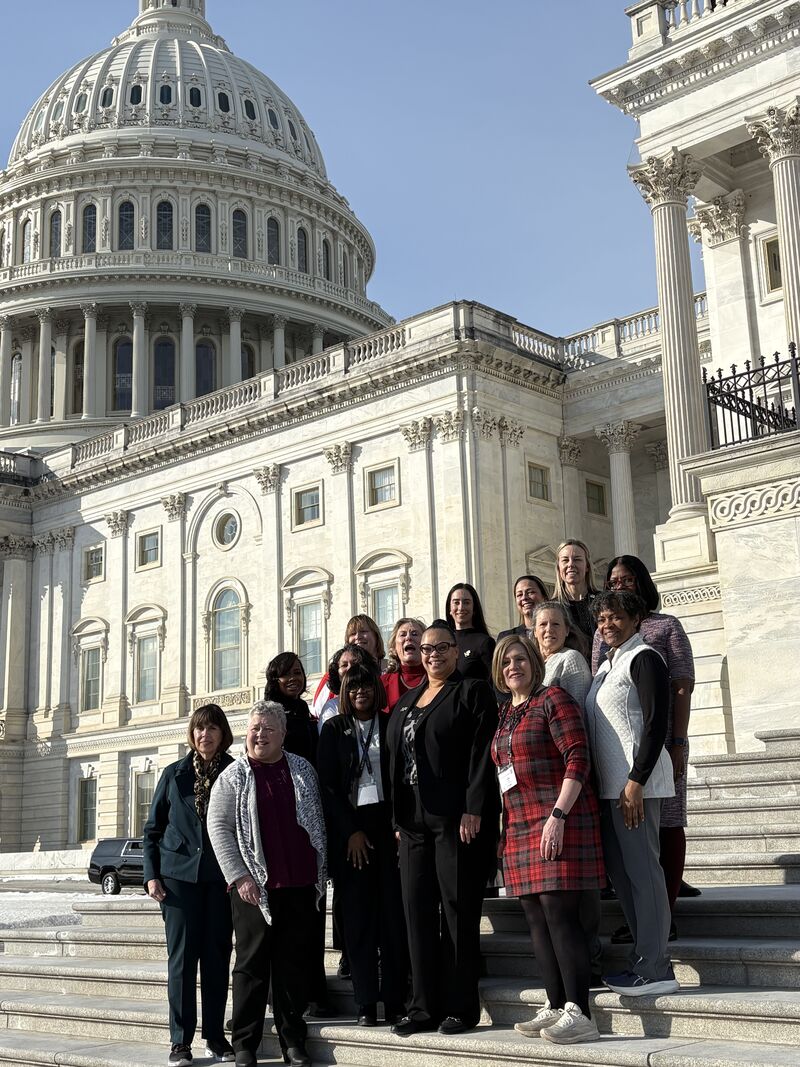
Photo: Nurses from Maryland went to Capitol Hill in Washington, D.C., for the American Academy of Nurse Practitioners’ Health Policy Conference in February.
August is Civic Health Month, and September is officially recognized as National Civic Awareness Month. Together, these observances offer the University of Maryland, Baltimore (UMB) community a timely opportunity to begin the academic year by examining how civic participation, public policy, and community engagement shape the health and well-being of the people and communities we serve.
Consider this fictional case:
Jordan is a 52-year-old Baltimore resident living with diabetes and hypertension. After a neighborhood bus route changes, Jordan has difficulty reaching medical appointments and the pharmacy. Unstable work hours make rescheduling challenging, while increasing rent and unresolved housing conditions add financial and emotional stress. When Jordan finally reaches a health care provider, the immediate concern is an infected foot wound, but the circumstances surrounding that wound extend far beyond the examination room.
The clinical team can treat the infection, prescribe medication, provide wound care, and reinforce health education. But clinical care alone cannot restore the bus route, improve housing conditions, expand access to affordable food, address workplace policies, or determine how public resources are distributed.
These are also civic health issues.
One Case, Many UMB Perspectives
Jordan’s experience could engage every school and profession across UMB.
A nurse may coordinate care and help Jordan understand how to manage the wound. A physician or advanced practice provider (nurse practitioner or physician assistant) may diagnose and treat the infection. A pharmacist may identify medication barriers and recommend affordable alternatives. A dentist may address oral health concerns that complicate chronic disease management. A social worker may connect Jordan with transportation, food, housing, and employment resources. A legal professional may help address unsafe housing conditions or workplace protections. Researchers and graduate professionals may study the systems and policies producing these barriers.
Each discipline brings essential expertise. Yet the case also raises a shared question:
How might civic participation, public policy, or community advocacy influence Jordan’s health outcomes?
Public decisions shape transportation, housing, education, environmental conditions, health care access, neighborhood investment, and many other factors that affect health. Civic participation gives individuals and communities a way to inform those decisions through voting, advocacy, public testimony, community service, research, organizing, and engagement with elected and appointed leaders.
Civic Health Is Nonpartisan
Civic health is not about telling someone which political party, candidate, or position to support. It is about ensuring that people understand how public decisions affect their lives and have meaningful opportunities to participate in shaping their communities.
For us as health and human services professionals, civic engagement is also an extension of our responsibility to recognize the conditions affecting the people we serve. We may not be able to solve every structural problem during a clinical visit, classroom session, or community encounter. We can, however, help people understand that their experiences are connected to systems and that their voices matter within those systems.
Starting the Academic Year Through a Civic Health Lens
Because Civic Health Month and National Civic Awareness Month coincide with the beginning of the fall semester, August and September provide a natural progression from awareness to action.
August invites us to recognize the connection between civic participation and community health. September challenges us to deepen our understanding of civic responsibility and identify ways to participate more intentionally in the communities around us.
Faculty might devote five minutes of class to asking:
How could civic participation affect the health or social issues we will study in this course?
Students can consider how policies and public decisions intersect with their future professions. Staff members can reflect on how their work supports access, belonging, and institutional trust. Researchers can consider how communities participate in identifying questions and interpreting findings. Clinicians can examine how civic and social conditions appear in patient encounters.
Even a short conversation can help us move beyond viewing health as something produced only in hospitals, clinics, pharmacies, dental offices, classrooms, or counseling settings.
Take One Civic Health Action
During August and September, members of the UMB community are encouraged to take one step:
- Register to vote or verify your voter registration.
- Learn which local and state officials make decisions affecting an issue important to you.
- Attend a community meeting or public forum.
- Contact an elected official about a health or social concern.
- Volunteer as an election judge or with a community organization.
- Learn more about a policy issue affecting the people or communities connected to your profession.
- Invite a classmate or colleague to discuss how civic participation relates to your shared work.
Vot-ER’s Civic Health Month initiative offers nonpartisan tools that connect voting and civic participation with community health. UMB’s Office of Community and Civic Engagement also provides opportunities to work alongside communities and support meaningful civic participation.
Jordan’s story reminds us that health is influenced long before someone enters an examination room and continues long after the visit ends. Across UMB, we have the knowledge, relationships, and collective responsibility to help build communities in which everyone has the opportunity to be heard, participate, and thrive.
Civic health is not separate from our work. It is everybody’s work.
The case presented in this story is fictional and combines circumstances commonly encountered across health and human services settings. It does not represent a specific individual.