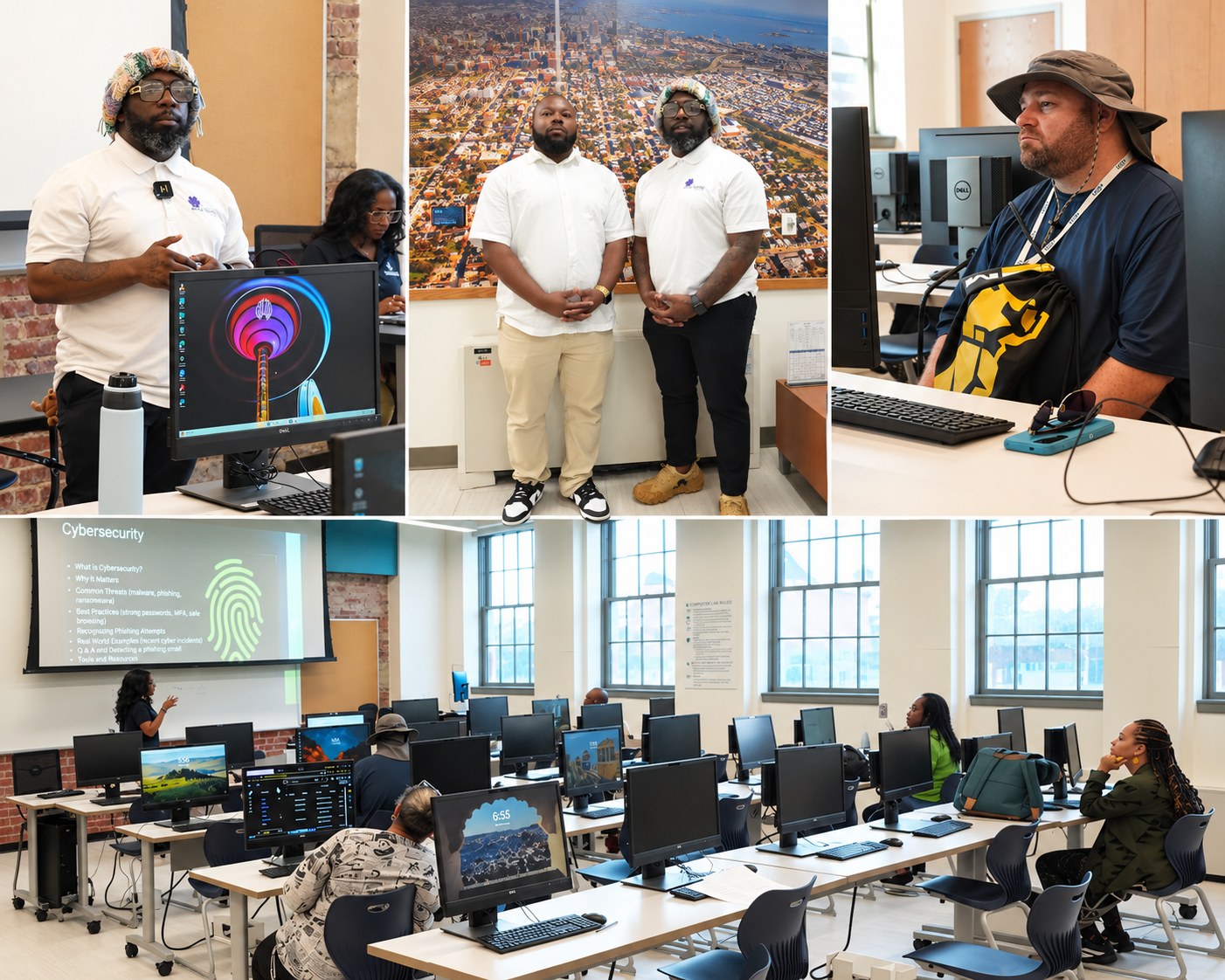
The UMB Community Engagement Center partners with The Flowers Whiting Initiative and A Prosperous Tomorrow to provide IT workforce development training for justice-impacted Baltimore residents.
The University of Maryland, Baltimore (UMB) Community Engagement Center (CEC) recently served as the home of the Digital Equity for Second Chances IT Workforce Development Program, a 13-week training initiative developed by The Flowers Whiting Initiative in partnership with A Prosperous Tomorrow.
The program provided returning citizens and justice-impacted individuals with hands-on exposure to digital literacy, information technology, cybersecurity, artificial intelligence, data, and other emerging technologies.
The collaboration reflects the CEC’s commitment to expanding access to resources and opportunities for West Baltimore residents through partnerships with community organizations.
A Prosperous Tomorrow served as the workforce development and technology training partner, while the CEC provided a community-based learning environment. The Flowers Whiting Initiative coordinated participant recruitment, engagement, and reentry-focused support.
“For returning citizens, digital equity is economic equity,” said Derrick Whiting, executive director of The Flowers Whiting Initiative and a MSW student. “Technology is involved in nearly every aspect of today’s workforce. We want returning citizens to have access not only to employment, but also to the skills and opportunities that can position them for sustainable careers.”
The program was designed with an understanding that individuals returning from incarceration can face unique challenges navigating a rapidly changing digital environment. Evening classes allowed participants to pursue training while balancing employment, family responsibilities, and other obligations.
Darius Beckford, chief operating officer of The Flowers Whiting Initiative, said partnerships are essential to making these opportunities accessible.
“Talent exists throughout our communities, but access to training and opportunity is not always equal,” Beckford said. “Bringing community organizations, workforce providers, and institutions like UMB together allows us to create pathways that help people turn their potential into opportunity.”