The lessons of Katrina and COVID resonate at the UMB Center for Cyber, Health, and Hazard Strategies event, where the need for collaboration among facilities and emergency management is a major focus.
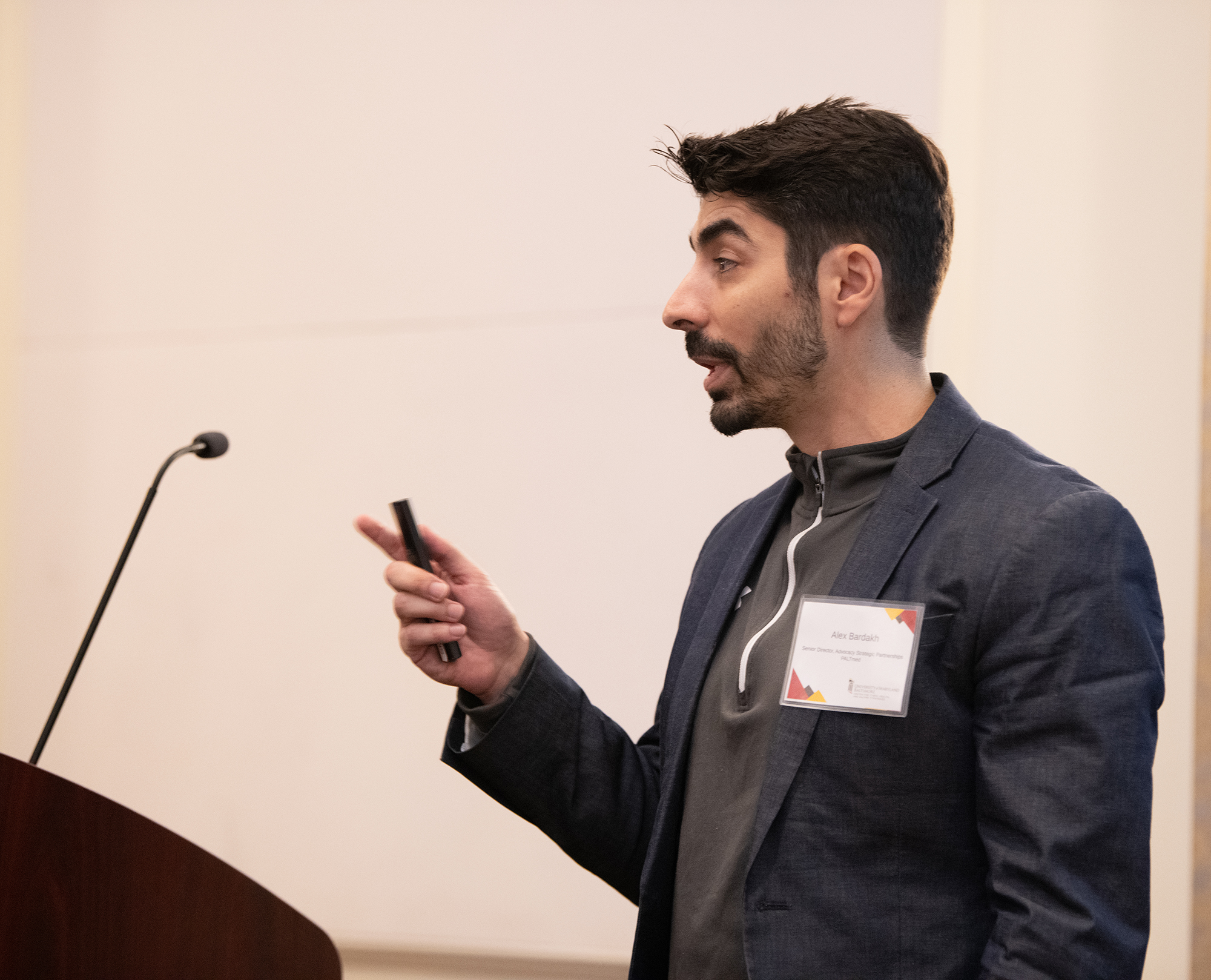
Photo: Alex Bardakh of the Post-Acute and Long-Term Care Medical Association speaks at the CHHS symposium. (Photos by Matthew D’Agostino)
As Hurricane Katrina tore through the Gulf Coast in 2005, thousands of vulnerable residents in nursing homes and long-term care facilities found themselves trapped in a system that was unprepared for catastrophe. Fifteen years later, the COVID-19 pandemic exposed many of the same weaknesses on an even larger scale — understaffed facilities, fragmented communication systems, shortages of medical personnel, and emergency plans that failed to account for the complex realities of caring for aging populations during a public health crisis.
Those hard-earned lessons were at the center of a symposium hosted by the University of Maryland, Baltimore’s (UMB) Center for Cyber, Health, and Hazard Strategies (CHHS), where national leaders in emergency management, geriatrics, and long-term care policy gathered May 1 to examine the future of preparedness in nursing homes and long-term care facilities.
The conference brought together policymakers, clinicians, emergency planners, and public health leaders for a candid discussion about what it will take to protect some of society’s most vulnerable populations during future disasters — whether pandemics, cyberattacks, hurricanes, or other large-scale emergencies.
Throughout the symposium, speakers returned to a common theme: Long-term care facilities cannot remain an afterthought in disaster preparedness.
“These are highly vulnerable populations, and we have to understand the unique complexities involved in caring for them,” said Fatime Naqvi, MD, assistant professor of geriatrics at George Washington University. “When you are in an emergency mode, you become a different person,” she warned, echoing the comments of all the speakers about the importance of planning and relationship building.
The symposium highlighted how emergency preparedness for long-term care facilities requires far more than evacuation plans and stockpiles of supplies. It demands relationships, coordination, staffing resilience, and deep subject-matter expertise.
A Highly Regulated Industry Facing Growing Risks
One of the keynote speakers, Alex Bardakh, MPP, senior director of advocacy and strategic partnerships, Post-Acute and Long-Term Care Medical Association, offered a sobering look at the challenges facing the post-acute and long-term care industry.
“The nursing home industry is the second-most-regulated industry behind nuclear power plants,” Bardakh said, underscoring the extraordinary complexity facilities face on a daily basis. Yet despite the intense regulatory oversight, he argued that nursing homes and long-term care facilities have historically been overlooked in larger emergency planning discussions.
Bardakh also emphasized that emergency preparedness in long-term care settings cannot rely on generalized disaster planning models. Facilities serving elderly populations have unique operational, medical, and logistical challenges that require experts who understand the field intimately.
He stressed the importance of involving subject-matter experts in preparedness planning, particularly individuals who understand the realities of nursing home operations, staffing limitations, medication management, patient acuity, and continuity of care.
The need for that expertise became painfully clear during Hurricane Katrina and the COVID-19 pandemic, he said, when confusion about leadership structures and operational responsibilities often slowed responses during critical moments.
Sometimes, Bardakh noted, preparedness begins with understanding seemingly basic information. “Knowing who the medical director is matters,” he said.
That type of institutional knowledge became critically important during emergencies when facilities needed immediate coordination with hospitals, government agencies, and emergency responders.
Bardakh repeatedly returned to the importance of strong coordination as the foundation of effective preparedness. “It’s all about relationship-building,” he said.
Strong relationships among nursing homes, hospitals, emergency managers, health departments, and community organizations can determine whether vulnerable residents receive timely care during disasters. Without establishing those relationships before an emergency occurs, coordination often breaks down when systems are under the greatest pressure.
His remarks reflected a broader theme throughout the conference: Preparedness is not merely about compliance, it also is about creating systems built on trust, communication, and collaboration.
 Lessons from Katrina and COVID
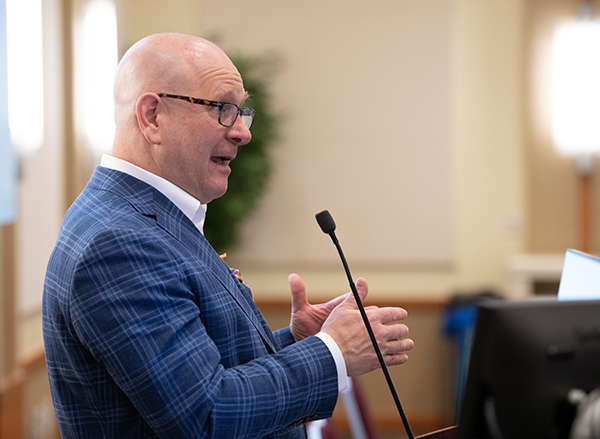
The devastating consequences of fragmented emergency systems also were a central focus for John Rabin (in photo, left), vice president of disaster management at ICF International and a former Federal Emergency Management Agency (FEMA) senior leader with experience directing federal responses to major disasters. Rabin spent years helping FEMA respond to some of the nation’s largest disasters, including Hurricane Katrina, one of the deadliest and costliest storms in U.S. history.
Drawing on those experiences, he described how emergency response systems often fail when agencies and institutions are not operating in coordination.
“When we don’t have coordinated care, that’s when systems break down,” Rabin said.
The consequences of those breakdowns are especially severe in long-term care environments, where residents often rely on medications, oxygen, mobility assistance, dialysis, or memory care services that cannot simply be paused during a disaster.
Rabin described how emergency preparedness requires an “all systems” approach that integrates health care providers, emergency management agencies, transportation systems, utilities, and government leaders long before a crisis begins.
The COVID-19 pandemic exposed major weaknesses in those systems nationwide. Nursing homes experienced some of the highest mortality rates during the pandemic, with facilities struggling to access personal protective equipment, testing resources, staffing support, and coordinated public health guidance.
Conference discussions highlighted how many facilities found themselves isolated during the early stages of the pandemic, often competing against hospitals and larger health systems for limited resources. At the same time, staffing shortages created enormous strain on workers who were already managing high-acuity populations.
For Rabin, the lessons from Katrina and COVID-19 point toward the same conclusion: Preparedness must become integrated into health care operations at every level.
Disaster planning cannot exist as a separate administrative exercise; instead, it must be woven into day-to-day organizational culture, communication structures, and leadership development, he said.
Understanding Vulnerable Populations
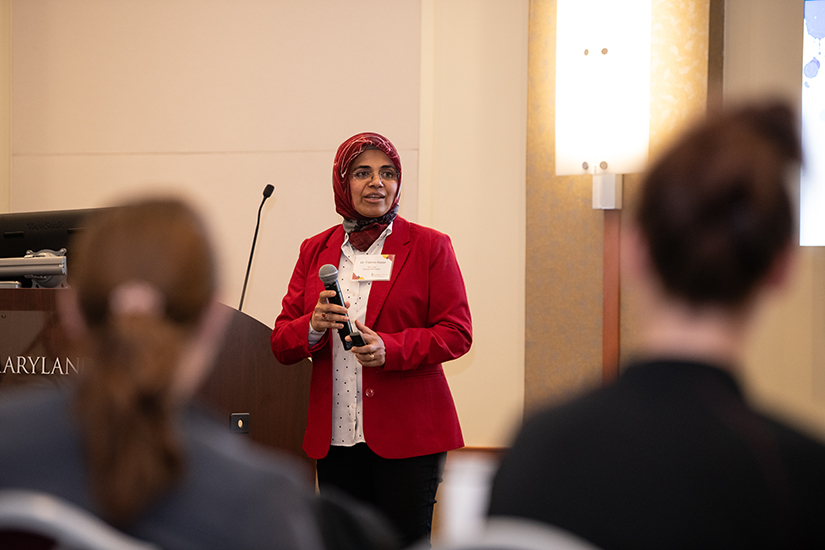
Naqvi (in photo, above) focused her remarks on the unique vulnerabilities facing residents in long-term care settings and the human realities that often complicate emergency response efforts.
“These are congregate settings,” she said, referring to the elevated risks associated with shared living environments. The pandemic demonstrated how quickly infectious diseases can spread through nursing homes and assisted living facilities, particularly among elderly populations with chronic health conditions or compromised immune systems, she said.
Naqvi noted that long-term care facilities care for residents who often have complex medical needs, cognitive impairments, limited mobility, and dependence on continuous support. Therefore, emergency planning for these facilities, she said, requires far more nuance than standard evacuation or shelter-in-place protocol.
She discussed the ongoing staffing challenges confronting nursing homes and long-term care facilities nationwide, including workforce shortages, burnout, and high turnover rates. Limited staffing, Naqvi said, can become even more dangerous during emergencies, when workers may themselves be affected by illness, transportation disruptions, or personal crises.
The emotional and psychological toll of emergencies also affects caregivers and health care workers in profound ways. “When you are in an emergency mode, you become a different person,” Naqvi said.
Stress, fear, exhaustion, and rapidly changing conditions can alter how individuals think and respond under pressure. Effective emergency preparedness, therefore, must account not only for operational logistics, but also for human behavior and mental resilience.
Naqvi also emphasized the importance of understanding patient populations when designing preparedness strategies. Residents with dementia, for example, might struggle to understand emergency instructions or adapt to abrupt environmental changes. Others may require uninterrupted medication schedules, specialized dietary support, or palliative care.
The discussion underscored how standardized emergency plans often fail to capture the complexities of real-world long-term care environments.
Moving Beyond Compliance
Throughout the symposium, speakers challenged the idea that preparedness can be achieved solely through regulatory compliance.
Although nursing homes and long-term care facilities operate within highly regulated environments, conference participants repeatedly stressed that checklists alone do not create resilience. Instead, preparedness depends on relationships, communication systems, leadership development, and continuous collaboration across sectors.
CHHS convened the symposium as part of its broader mission to strengthen public health preparedness, emergency management, and health care resilience through research, training, and strategic partnerships.
For the past several years, CHHS has partnered with long-term care facilities across Maryland to help fulfill licensing requirements through free, community-based half-day preparedness exercises focused on emerging threats, operational challenges, and real-world response capabilities.
“Giving voice to and recognizing the very real, practical challenges that long-term care facilities face is key to ensuring that they’re included in emergency planning efforts,” said Trudy Henson, JD, public health program director, CHHS.
As planning began for this year’s exercises, CHHS experts found themselves navigating a rapidly shifting legal, regulatory, and preparedness landscape filled with new uncertainties for providers and emergency planners alike. In response, CHHS developed this symposium not simply as another training opportunity, but as a forum to examine where long-term care facilities and nursing homes stand today — and where preparedness efforts must evolve in the future.
At its core, the symposium sought to answer two interconnected questions: What is the future of long-term care preparedness, and where are we right now?
Recognizing and elevating the very real operational, workforce, financial, and regulatory challenges facing long-term care facilities is essential to ensuring these providers remain fully integrated into emergency planning and response efforts.
The center has increasingly focused on the intersection of health care delivery and emergency response, particularly as health care systems face growing threats ranging from pandemics to cyberattacks.
During the symposium, participants discussed how emerging risks — including cybersecurity threats targeting health care infrastructure, climate-related disasters, and aging populations — will place additional pressure on long-term care systems in the years ahead.
Maryland, like many states, faces growing demand for long-term care services as the population ages. That demographic shift makes preparedness planning even more urgent.
Speakers emphasized that future emergency strategies must include long-term care facilities as central partners rather than peripheral stakeholders. That includes integrating nursing homes into regional emergency planning exercises, improving information-sharing systems, strengthening health care coalitions, and expanding workforce development initiatives.
Several speakers also highlighted the need for stronger communication channels between government agencies and long-term care providers during crises. For example, during COVID-19, rapidly evolving guidance often created confusion for facilities already operating under enormous stress.
Building trusted relationships before emergencies occur, participants said, can improve coordination and reduce delays when disasters strike.
Building Resilient Systems
The symposium closed with a broader reflection on what resilience truly means in the context of long-term care.
Preparedness often is measured by operational benchmarks: stockpiles of supplies, emergency protocols, response times, and regulatory requirements. But throughout the conference, speakers emphasized that true resilience is ultimately built on people and relationships. It depends on organizations communicating effectively with one another, facilities maintaining trusted partnerships with emergency managers and public health officials, and frontline workers receiving the training and support they need to respond under pressure. Above all, it requires policymakers to understand the day-to-day realities facing long-term care providers before the next crisis strikes.
The discussions also served as a reminder that nursing homes and long-term care facilities care for individuals who are frequently invisible in broader public conversations about emergency preparedness. The elderly, medically fragile, and chronically ill populations living in these facilities often cannot advocate for themselves during crises. That responsibility falls to health care leaders, policymakers, emergency managers, family members, and communities.
For conference participants, the lessons of Katrina, COVID-19, and other disasters remain urgent. Disasters will continue to occur. Public health emergencies will evolve. Health care systems will face new and increasingly complex threats.
The question, speakers said, is whether the nation is willing to build the relationships, coordination systems, and expertise necessary to protect vulnerable populations before the next crisis arrives.
The symposium made clear that the future of long-term care preparedness will require a fundamental shift in how emergency planning is approached — one that recognizes long-term care facilities not as secondary considerations, but as essential components of the nation’s health care infrastructure.
And, as the conference concluded, one message resonated throughout the room: Preparedness begins long before an emergency starts.
It begins with relationships.