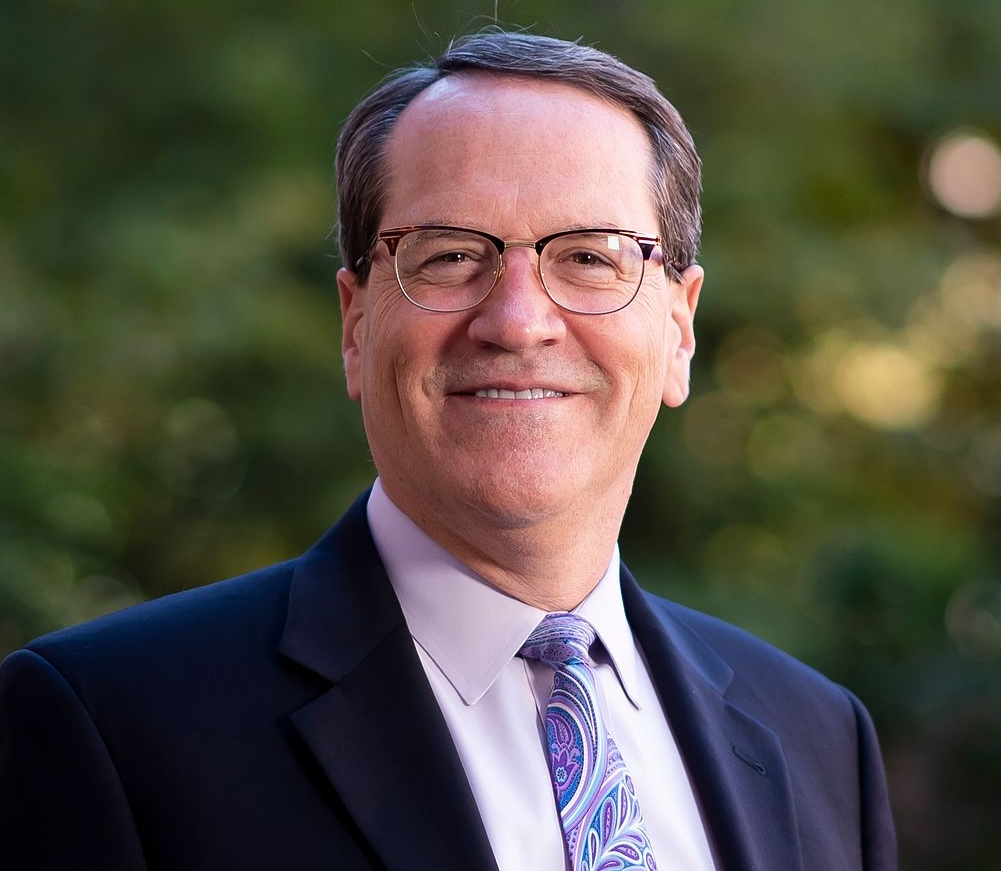
Learn more about the influential legal scholar’s teaching and scholarship.
Distinguished University Professor Michael Van Alstine, JD, is an influential legal scholar working at the intersection of international law and domestic law, with expertise in how domestic courts interpret and apply treaties, especially commercial law treaties. He teaches in the Business Law Program and International and Comparative Law Program at the University of Maryland Francis King Carey School of Law.
Joining the Maryland Carey Law faculty in 2002, Van Alstine served as associate dean for research and faculty development from 2006 to 2010 and was the Piper & Marbury Professor of Law from 2016 to 2018. He has led two law school programs, serving as director/co-director of the International and Comparative Law Program from 2003 to 2016 and director of the Business Law Program from 2018 to 2022. In both 2008 and 2016, he was voted the law school's Outstanding Faculty Member of the Year.
The following is a Q&A with Van Alstine:
You are a prolific scholar. Can you describe a line of inquiry that has been especially meaningful to you?
I did a series of articles starting in the 1990s beginning with one called "Dynamic Treaty Interpretation," which involved understanding how treaties function in our domestic legal system. Commercial law treaties are very beneficial for American businesses, so I've argued that courts should flexibly interpret such treaties in a way that considers the circumstances of the growth of commercial practices and our relationships with other countries.
You led two academic programs in your career at Maryland Carey Law: the Business Law Program and the International and Comparative Law Program. How are these two areas of the law connected?
They overlap because business today, of course, is international. Over time we have recognized that international treaties, on which much of my research is focused, are valuable for us, for our companies. They enable small and large businesses to engage in product markets outside the United States. A bigger market is a better market. I have really enjoyed the opportunity to see that these two different fields, in the business law realm, are really just intertwined fields.
For more than 20 years, you announced the graduates' names at the law school's annual Hooding Ceremony. Why did you take on this duty and go to great lengths to ensure you pronounced the names correctly?
Our names are an essential part of our identities. It's just a basic human right to have your name announced the way you want it to be pronounced. It also was a wonderful opportunity to interact with students in a completely different way. There's an interesting aspect of humanity when you talk to people about their names. And when you pronounce a name correctly, it says, 'I've listened to you. I have listened to what you said about you.' It was a rich and rewarding experience and, possibly, the most stressful part of my job (in a good way).
Which has been your favorite course to teach through the years?
My first thought was International Business Transactions; I love IBT and have a case book on the topic, but I just finished teaching 1L contracts, and that has to be it. It gives me an opportunity to introduce how empowering contracting can be because it's your ability to lock down the future in your interactions with other people. Also, in first-year courses there are moments when you can just feel the class coalescing. You see moments of kindness when a student is struggling and then another steps up to assist. You also see the students start to make connections with the material and what they are learning in other classes. They're putting a lot of pieces together. It's wonderful.