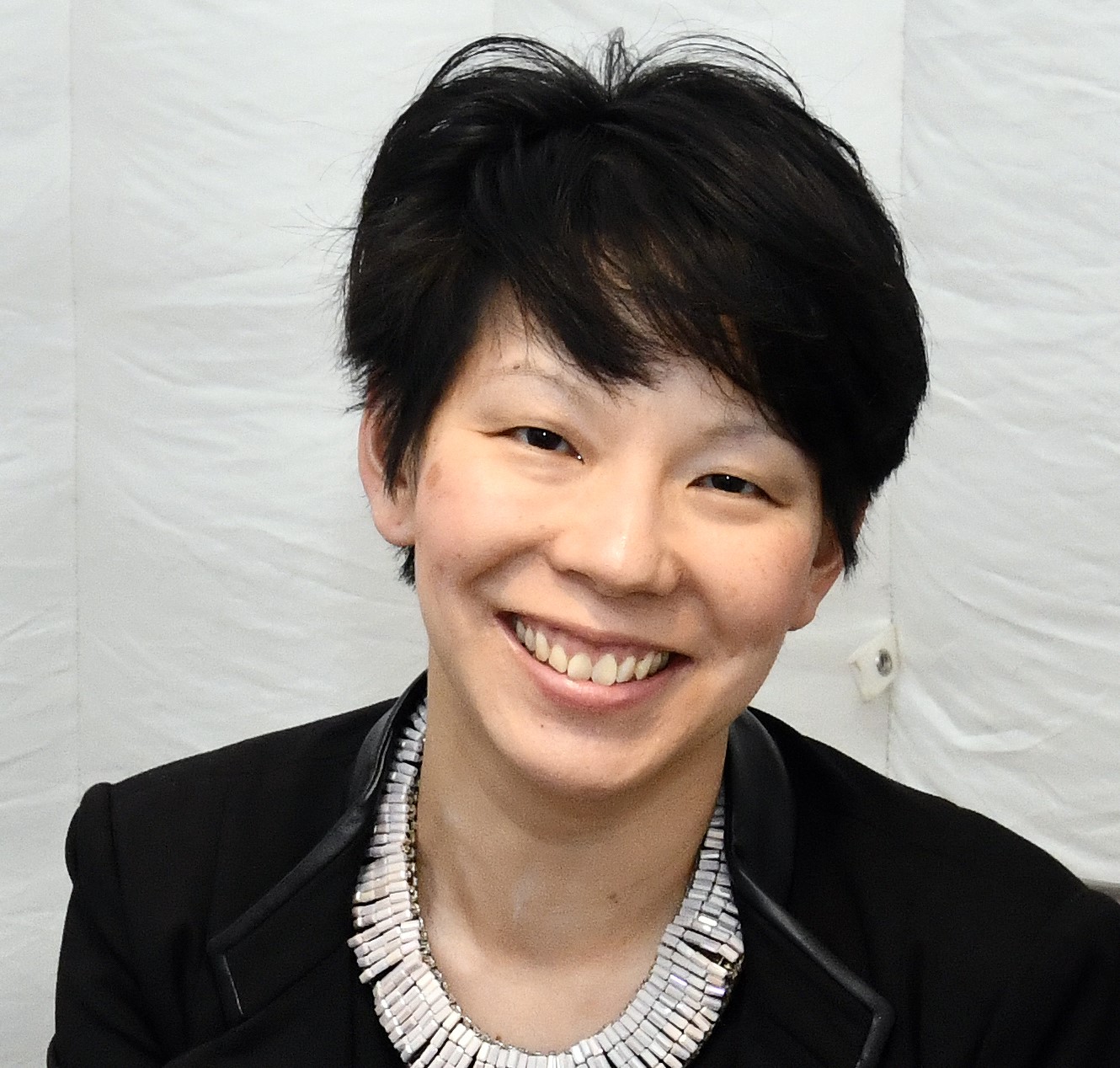
The director for strategic initiatives at the American Association for the Advancement of Science answers five questions about her SciComm pathway and practice.
SciComm Voices is part of the Science Communication certificate program's monthly newsletter SciComm Spotlight.
How do people find their way to science communication (SciComm)? To find out more, we have asked a SciComm practitioner five questions.
Julie Rosen, PhD, is sharing a bit about her SciComm pathway and practice. Rosen is the director for strategic initiatives at the American Association for the Advancement of Science (AAAS) and is an adjunct professor in the Science Communication certificate program at the University of Maryland School of Graduate Studies. She earned her doctorate in Molecular and Cell Biology at the Uniformed Services University of the Health Sciences.
When did you first know that you wanted to be a science communicator?
I started my professional journey wanting to be a writer, taking science classes on the side until one day science became my focus. I liked many aspects of biomedical research but then realized that I liked reading and writing about it more than I enjoyed actually doing it. Although I was internally pivoting in my career aspirations during grad school, I think the most telling moment was when the first thing one of my thesis committee members said during my defense was, "That was the most well-written dissertation I've ever read." And I haven't picked up a pipette since.
What do you consider your biggest success as a science communicator and why?
I was incredibly fortunate to work in the communications office at the National Institutes of Health early in my career. One of the science stories I wrote about centered on a team of researchers trying to understand a rare medical condition in two young siblings. Their work led to the discovery of a previously unidentified genetic disease and a diagnosis for the family. I had the opportunity to write the news release about the scientific paper and a web-based feature article about the team behind the discovery, as well as develop a video featuring the family whose lives changed because of the research. I didn't win any awards for this work, but it felt amazing to cover a story starting with the basic research in a lab all the way to the interview with parents who felt such overwhelming gratitude for finally having a name for the disease that their children had been battling since birth.
Whose social media feed really speaks to you at the moment and why?
In recent years, I've started really thinking about and centering accessible science communication, so social media feeds that highlight how to create content with accessibility in mind, especially ones that include tips for writers, really resonate with me.
What is your No. 1 piece of advice to someone just starting in SciComm?
Visit a museum. If you can, visit a science or natural history museum. Museums are wonderful spaces that invite in audiences of all levels of experience and interest to interact, learn, explore, and play. Successful museums consider all the possible visitors and then create content that works for a broad swath of people. A well-designed exhibit can reignite a spark of curiosity and wonder in a world so vast and intricate and yet so intimate — consider all the processes inside your brain and your body happening automatically right now as you're reading my response. I deeply appreciate all the time and thought that goes into developing museum spaces to ensure that they engage the most people for as long as possible. This is a skill we're all trying to build as science communicators, and we can learn a lot by exploring places designed to bring us joy.
What’s something you’re curious about right now that has nothing to do with your job?
A lifetime ago, I used to sew. I made clothes, custom curtains, pillow covers, and did a lot of cross-stitch. For a long time, I haven't had the bandwidth to create anything like this, outside of the odd stitching up of holes in small humans' clothes ripped on the playground, so I'm trying to get back into sewing and other needle and fiber crafts.