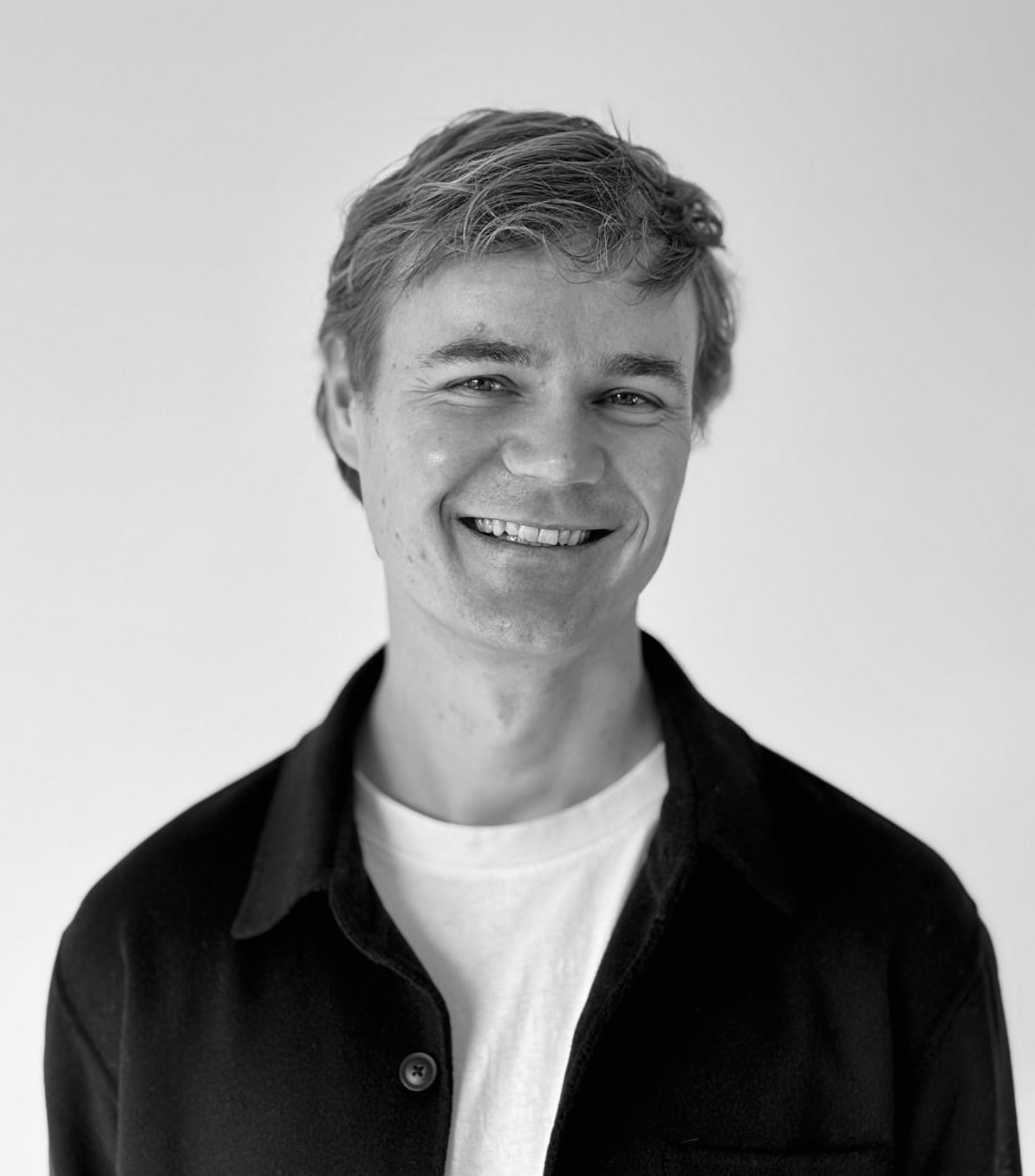
The physicist and science communicator answers five questions about making science relatable, why visibility matters, and communicating beyond the scientific bubble.
"SciComm Voices" is part of the Science Communication certificate program's monthly newsletter "SciComm Spotlight" (subscribe via our website).
How do people find their way to science communication (SciComm)? To find out, we ask a SciComm practitioner the same five questions in "SciComm Voices" every month.
This month's "SciComm Voices" features Lucas Kreuzer, PhD, a physicist and instrument scientist at the neutron research facility FRM II in Munich, where his research focuses on functional polymer films and neutron scattering. Drawing on his own experience learning to communicate highly specialized research beyond academia, he now works with scientists and research institutions to make complex science clear, compelling, and visible.
His science communication experience ranges from podcasting and social media to scriptwriting for kurzgesagt, one of the world’s most-watched science channels.
When did you first know that you wanted to be a science communicator?
I guess I wanted to be a science communicator before I even knew there was a term for it!
As a kid, I wanted to become an astronaut, and being a scientist brought me close to that: I did some experiments in zero gravity on a parabola flight! Having that astronaut dream made me talk for hours about space, watching science channels with my friends, or just discussing what superheroes are scientifically the most accurate. Being a nerd led to a PhD in physics, where I could share my love for exploring with professionals. Working together with a YouTube channel like kurzgesagt gives me the privilege to share this excitement with millions of people outside of a lecture hall. Getting messages about our work there and seeing how discussions unfold in the comment section shows me the impact of SciComm every day. Today I am just super happy that I could turn my passion into a profession.
What do you consider your biggest success as a science communicator and why?
My biggest success are my students.
For example, two years ago, I got an email from a student saying she found me and my SciComm on LinkedIn, and if there's any way to join my team. So SciComm turned a follower into a colleague and finally a collaborator. Followers, engagement, reach — this is not really success. But seeing former students thrive in science is something I consider real impact. Role models open doors for as many people as possible, as wide as possible, and I try to be that role model. To me, visibility might be one of the most underrated assets for a scientist.
Whose social media feed really speaks to you at the moment and why?
I try to curate my personal feed to have a good balance between different SciComm approaches: professional, institutional, personal, emotional, or in a fun way. And yes, science is allowed to be personal, emotional, and fun! That is something I see many scientists struggle with — me included. But emotions and good examples are what make your science relatable. If you have to work with a good hook or a funny image to make it stick, is that really so wrong? Scientists in STEM can learn a lot from our colleagues in disciplines like communications there.
What is your No. 1 advice to someone just starting in SciComm?
Explain what you do to your parents or even grandparents or someone their age. Explaining your science to your peers at a conference is surprisingly easy because you kind of speak the same language. Explaining it to people outside your bubble with another background and life experience is much harder and the real deal! But you know what they say: Only if you can teach the subject, you are a real expert. So, take on the challenge and talk about your topic on- and offline. That's the core of SciComm.
What’s something you’re curious about right now that has nothing to do with your job?
Scientists look at the world differently. Depending on what field you're trained in, you will have a different angle. My wife and I love to be on trips with fellow scientists. Taking the sand dunes in Morocco as an example: A physicist sees wind patterns, a biologist sees ecosystems, and an anthropologist is already deep into navigating by the stars, as this is the only reliable orientation in the desert. We are planning on curating more science-led field trips that make science tangible for people. And who knows ... I am still dreaming about going to space. Maybe one day I'll lead a group of science-travelers up there!