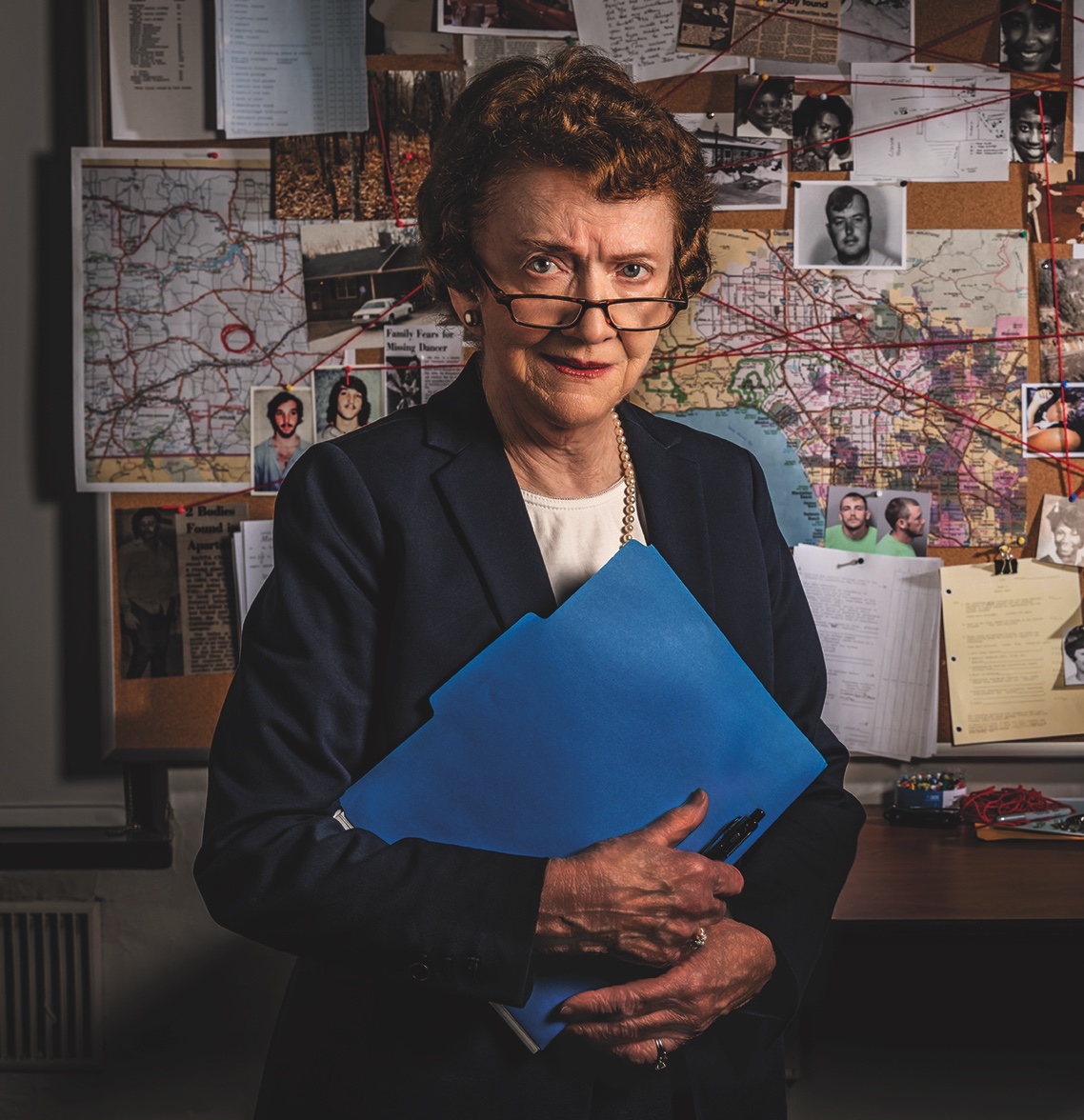
Read about Ann Wolbert Burgess’ collaborations with the FBI’s Behavioral Science Unit as a methodologist helping understand the motivations behind violent offenders and serial killers in “CATALYST.”
Photo: Ann Wolbert Burgess. Photo by Gary Wayne Gilbert/Courtesy of Boston College
Never underestimate the influence of a teacher. When Ann Wolbert Burgess, DNSc, MS ’59, RNCS, FAAN, an internationally renowned expert in forensic and psychiatric nursing and a pioneer in crisis and trauma treatment, was an undergraduate nursing student at Boston University in the early 1950s, a psychiatric nursing instructor told her she thought Burgess would be “good in psych. She just said, ‘Do it.’ So, I did,” Burgess says.
Neither could possibly have known at the time where that suggestion would take Burgess. Moving from Boston to Maryland with her husband, who was in the Air Force and stationed at Fort Meade, Burgess took advantage of a full scholarship to continue her psychiatric nursing education at the University of Maryland School of Nursing (UMSON), earning her master’s degree. She worked as a clinical instructor at the then-Spring Grove State Hospital in Catonsville, teaching psychiatric nursing to students in clinical rotations, focusing on critical patient interviewing skills.
Those skills would serve as the key to her groundbreaking, decades-long collaborations with the FBI’s Behavioral Science Unit as a methodologist, helping to identify, interview, and understand the motivations behind violent offenders and serial killers — work that was chronicled in the Netflix hit series “Mindhunter.”
“I was fascinated with it — that they could take these horrible crime scenes and make some sense out of it,” Burgess says. Of course, in the TV series, the character of Wendy Carr, based on Burgess, is a psychologist, not a nurse. “I was horrified!” Burgess says. “They had me as a psychologist, of all things! When I would go into court, they would say, ‘Oh, you’re just a nurse.’ It was a devaluing of my professional background.”
That background included being one of the first Doctor of Nursing Science graduates in the nation, pioneering work in assessing and treating trauma and rape victims, and co-founding one of the first hospital-based crisis counseling programs at Boston City Hospital with a colleague from Boston College. Burgess continues to teach there as a professor in the Connell School of Nursing and to practice privately and conduct research.
From Serial Killers to Mass Shooters
The focus of that research has changed over the years. “There aren’t as many serial killers,” she says. “And I think that’s because we’re getting them earlier. We have better techniques, evidence collection, DNA. And also, the people who are interested in committing violence have changed — instead of going after one person, they go after a mass shooting.”
That was the subject of the 2025 Ann Ottney Cain Lecture she presented at the 70th anniversary celebration of UMSON’s Doctor of Nursing Practice Psychiatric Mental Health program in November. Or rather, it was about her research into the detrimental effects of active shooter drills, particularly on the mental health of providers.
“We as nurses have a central role: We are front-line responders to balance patient protection with our own safety during crisis situations,” she said during the lecture. “We also have an ethical obligation to provide care during emergencies while trying to maximize personal safety and organizational support.”
An inappropriately conducted active shooter drill can have far-reaching, devastating mental health consequences on providers and patients, she explained in the lecture. “You have to have trauma-informed preparedness and integrate psychological safety principles into any emergency planning and training,” she said.
Another evolution in Burgess’ work involves the use of artificial intelligence (AI) and prompt engineering to provide interpretations of data from various experts’ perspectives. “Then we compare our human being interpretation with the AI, and it’s fascinating,” Burgess says. “It’s very revealing because the machine does the work, but it’s just a tool. You have to add human interpretation.”
Read more about Ann Wolbert Burgess in the spring issue of CATALYST.
The latest issue of "CATALYST" magazine celebrates the students and alumni who represent the future of Maryland’s health, law, and social work professions. Read about a School of Nursing alumna who turned her 2023 Grid Pitch idea into Ryan’s Place, a health care center in Gaithersburg, Md.; how Maryland Carey Law’s Law and Health Care Program prepares students to serve; a School of Dentistry graduate who studies gene therapies to prevent and treat cleft lip; a School of Social Work graduate who has been appointed to Maryland’s Commission on LGBTQIA+ Affairs; the School of Pharmacy’s newly launched, one-of-a-kind MS in Artificial Intelligence for Drug Development program; and what’s on the desk of Courtney Jones Carney, assistant vice president of student success, leadership, and engagement.