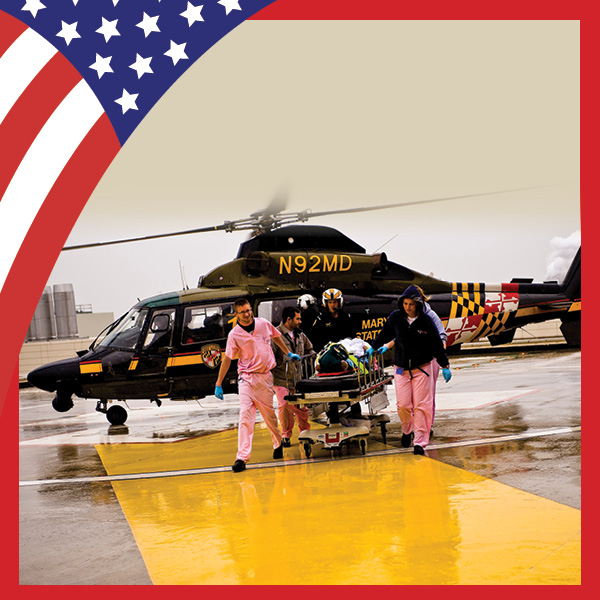
Dr. R Adams Cowley’s visionary concept about the timely treatment of traumatic injury still resonates at the Shock Trauma Center and continues to save lives in Maryland and beyond.
This story is one in a series about the University of Maryland, Baltimore’s (UMB) contributions to U.S. history as the nation celebrates its 250th birthday this year. The stories will be featured on The Elm website and in The Elm Weekly newsletter. The series also can be read at the UMB Celebrates America at 250 website.
For much of American history, severe traumatic injury was often considered a death sentence. Victims of serious car crashes, gunshot wounds, industrial accidents, and other catastrophic injuries frequently died before reaching definitive medical care.
Today, trauma systems save countless lives every day across the United States and around the world. At the center of that transformation stands one of the University of Maryland, Baltimore’s (UMB) most influential contributions to medicine: the development of modern trauma care through the R Adams Cowley Shock Trauma Center at the University of Maryland Medical Center.
As America celebrates the 250th anniversary of its independence in 2026, UMB is proud to recognize the groundbreaking work that forever changed the way physicians, hospitals, emergency responders, and health systems respond to and treat traumatic injury.
The story begins with visionary surgeon R Adams Cowley, MD, who earned his medical degree from the University of Maryland School of Medicine (UMSOM) in 1944 and is often called the “Father of Trauma Medicine.”
In the 1960s, Cowley challenged conventional thinking by arguing that trauma was a distinct medical condition requiring specialized treatment and rapid intervention. Through years of research and clinical observation, he developed the concept of the “Golden Hour” — the critical first hour after injury when prompt medical care can mean the difference between life and death.
At the time, this idea was revolutionary. Hospitals were not organized around trauma care, and emergency medical services were still in their infancy. Cowley envisioned an integrated system that would bring highly trained providers, advanced transportation, specialized facilities, and coordinated emergency response together to treat critically injured patients.
That vision became reality in Baltimore.
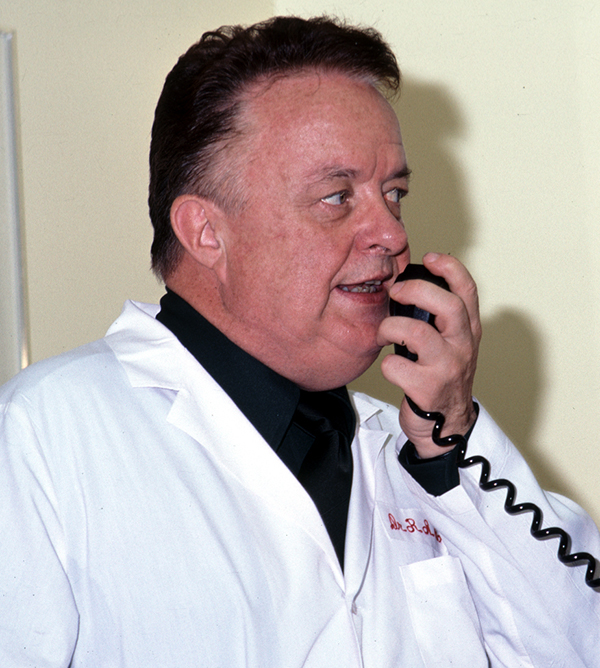
In 1977, R Adams Cowley successfully demonstrated a prototype portable satellite station communications system designed to advance emergency medical response.
Building a Coordinated Network
What began as a small clinical research effort grew into the Maryland Institute for Emergency Medical Services Systems and the Shock Trauma Center, creating one of the first statewide comprehensive trauma systems in the nation. The model linked ambulance services, helicopters, emergency departments, trauma surgeons, rehabilitation specialists, and hospitals into a coordinated network designed to move patients rapidly to the care they needed.
The impact was profound. Survival rates improved substantially, and Maryland became a national model for trauma care. Concepts pioneered through Shock Trauma helped shape emergency medical systems throughout the United States and influenced the development of trauma centers around the world.
Shock Trauma remains the nation’s first and one of its most respected trauma centers. It treats thousands of critically injured patients each year and serves as a destination for the most complex trauma cases from across the region. Its multidisciplinary teams care for victims of motor vehicle crashes, violence, falls, industrial accidents, burns, and other life-threatening injuries while continuously advancing the science of trauma medicine.
Its influence extends far beyond patient care.
Through UMSOM and UMB’s broader academic enterprise, Shock Trauma has trained generations of surgeons, nurses, emergency physicians, anesthesiologists, rehabilitation specialists, and first responders who have carried its innovations across the globe. Research conducted by its faculty continues to shape best practices in resuscitation, emergency surgery, critical care, rehabilitation, and disaster response.
The center also has contributed significantly to military medicine. Lessons learned from civilian trauma care in Baltimore have informed battlefield medicine and emergency response strategies, helping improve survival rates for service members injured in conflicts around the world. Likewise, innovations developed in military settings have been adapted and refined through partnerships with UMB researchers and clinicians, creating a powerful cycle of innovation that continues today.
Lifesaving Legacy
More than half a century after Cowley introduced the concept of the Golden Hour, the principles established at Shock Trauma remain foundational to modern emergency medicine. Every helicopter dispatch, trauma activation, emergency transport, and coordinated trauma response reflects ideas that were pioneered and refined in Maryland.
As the nation marks 250 years of progress, UMB celebrates the visionaries, clinicians, researchers, educators, and patients whose experiences helped build one of the most significant advances in American medicine. From Baltimore to battlefields, from rural highways to major metropolitan trauma centers, Shock Trauma continues to save lives every day.
It is a legacy that exemplifies UMB’s enduring mission: transforming discovery into action, advancing health, and improving lives in Maryland, across the nation, and around the world.
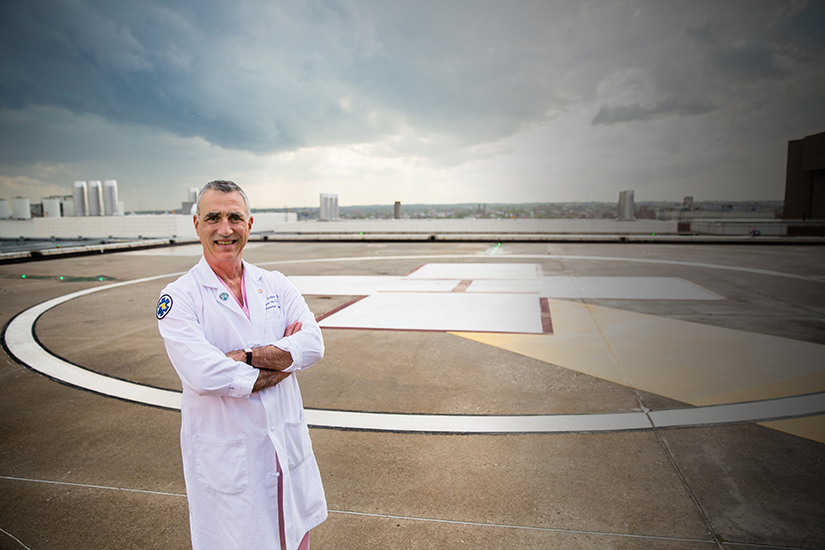
Thomas Scalea, MD, Physician-in-Chief of the R Adams Cowley Shock Trauma Center and UMB Distinguished University Professor, has carried on the tradition of excellence at the R Adams Cowley, leading Shock Trauma for nearly 30 years.