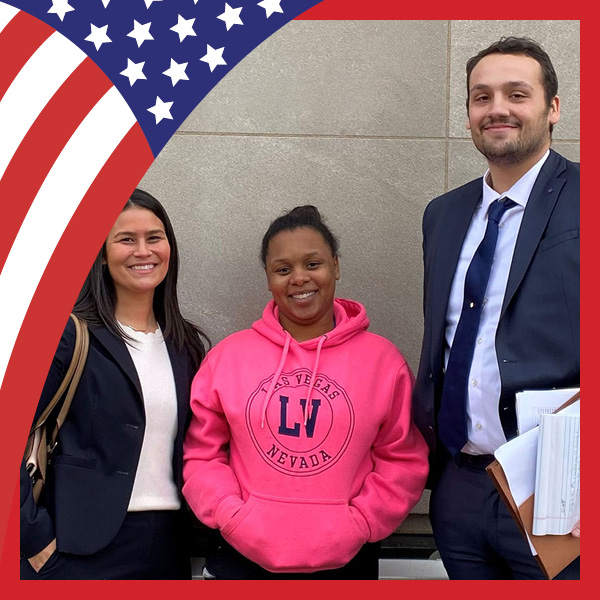
With the Cardin Requirement and a commitment to experiential learning, Maryland Carey Law teaches its students in clinics, courtrooms, and communities as well as in classrooms.
This story is one in a series about the University of Maryland, Baltimore’s (UMB) contributions to U.S. history as the nation celebrates its 250th birthday this year. The stories will be featured on The Elm website/The Elm Weekly newsletter in the coming months. The series can be read at the UMB Celebrates America at 250 website.
What does it take to prepare a lawyer to serve the public?
For much of American history, legal education centered on classrooms, textbooks, and lectures. While students learned legal theory, many graduated with limited opportunities to apply their knowledge to the real-world challenges facing individuals and communities.
At the University of Maryland Francis King Carey School of Law, leaders recognized that effective lawyers needed more than academic preparation. They also needed experience. And that belief would help transform legal education in Maryland and influence law schools across the nation.
As the United States celebrates the 250th anniversary of the Declaration of Independence in 2026, Maryland Carey Law’s pioneering commitment to clinical legal education stands as one of the University’s most significant contributions to American professional education.
The school’s emphasis on hands-on learning dates back nearly a century. Beginning in the 1930s, law students gained practical experience through partnerships with the Baltimore Legal Aid Bureau, working alongside attorneys to help individuals navigate legal challenges.
Over time, the school expanded those opportunities, embracing the philosophy that legal education should prepare students not only to understand the law but also to use it in service of others.
That vision accelerated under Dean Michael Kelly, JD, PhD, who led the school from 1975 to 1991. During his tenure, experiential learning became a defining feature of the Maryland Carey Law experience.
Building on an externship program established with the Legal Aid Bureau and an innovative in-house Juvenile Law Clinic, the school developed a growing network of clinics that allowed students to work directly with clients under faculty supervision. These programs addressed some of society’s most pressing legal and social issues, including civil rights, disability rights, housing, health care, elder law, consumer protection, environmental law, mediation, and public health.
Students were no longer simply studying legal principles. They also were helping real people solve real problems.
The Cardin Requirement
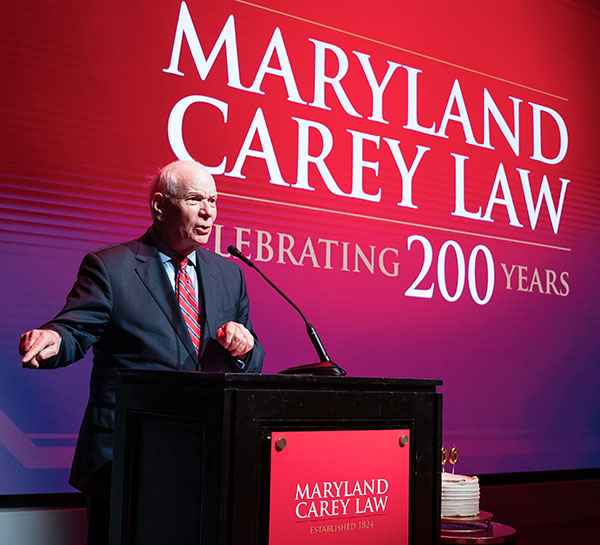
The movement gained additional momentum in 1987, when Maryland Carey Law alumnus Ben Cardin, JD ’67 (in photo, left), then a U.S. representative, and other supporters helped secure state funding to expand clinical education at the law school. The investment allowed the law school to create new opportunities for students and strengthen what would become one of the nation’s most respected clinical programs.
The school’s commitment to experiential learning reached a historic milestone when it became one of the first law schools in the United States to require students to complete a clinical experience before graduation.
Known as the Cardin Requirement, the policy reflects a simple but powerful idea: Every future lawyer should graduate after having worked directly with clients and confronted the practical realities of the legal system.
The requirement helped establish a new standard for legal education.
Today, experiential learning is widely recognized as an essential component of legal training, and many U.S. law schools have adopted similar graduation requirements. What was once considered innovative has become a model for preparing attorneys to enter practice with greater confidence, competence, and a deeper understanding of public service.
The impact extends far beyond the classroom.
For decades, Maryland Carey Law students have provided legal assistance to thousands of Maryland residents and helped strengthen communities throughout the state. Through clinics and externships, they have advocated for children and families, supported older adults, protected consumer rights, addressed housing instability, advanced environmental justice, and expanded access to health care and legal services.
Their work has demonstrated that legal education can serve both students and society.
A Legacy of Clinical Education
As the United States marks 250 years of history, Maryland Carey Law’s leadership in clinical education reflects a broader national story about professional training, civic responsibility, and public service. By insisting that future lawyers learn through practice as well as study, the school helped redefine what it means to prepare legal professionals for the challenges of a changing nation.
For generations, Maryland Carey Law has shown legal education can happen in courtrooms, clinics, neighborhoods, and communities where the law has the power to change lives.
That legacy continues today, shaping lawyers who are ready to serve Maryland, strengthen the justice system, and help build a more equitable America.
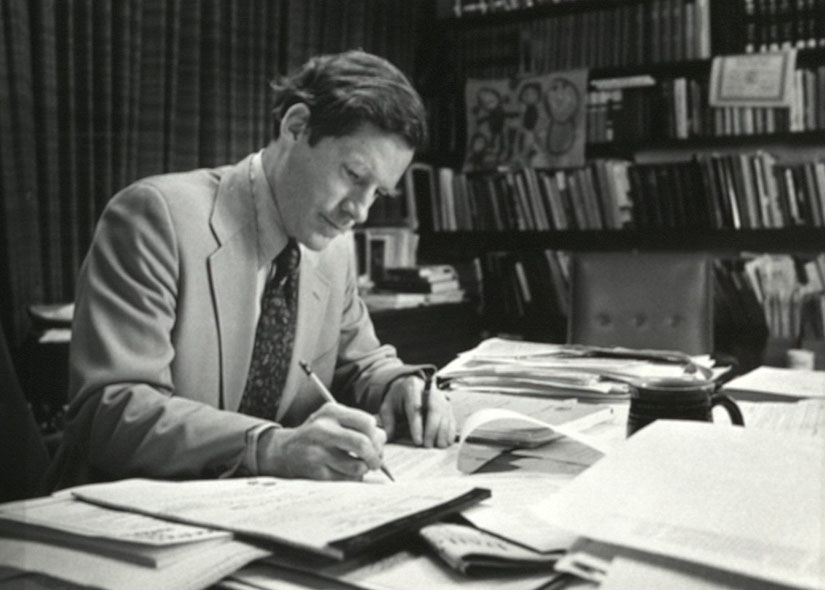
Michael Kelly served as the University of Maryland School of Law’s dean from 1975 to 1991 and helped launch the Cardin Requirement, which made clinical experience a condition of graduation at the school. He died in 2023 at age 85.