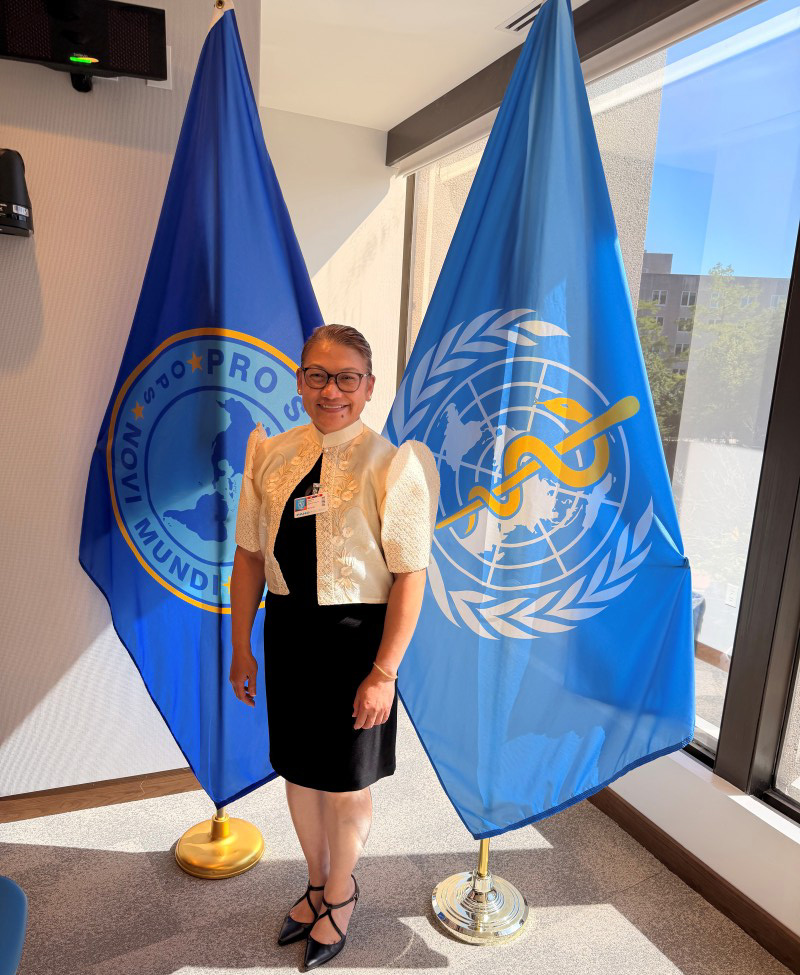
Assistant professor Angelica Fernandez-Dizon shares her insights on health workforce planning and the future of primary care on a virtual panel hosted by the Pan American Health Organization.
Advanced practice nurses are essential, but the entire nursing workforce requires strategic investment, supportive policy, and strong academic preparation.
That was the key message that resonated with Angelica Fernandez-Dizon, DNP, MD, MBA-HCM, NP-C, assistant professor, University of Maryland School of Nursing (UMSON), who participated in a virtual panel hosted by the Pan American Health Organization (PAHO), the regional office of the World Health Organization.
The event, held in honor of International Nurses Day on May 12, drew nearly 2,000 attendees from 61 countries across the Americas to discuss health workforce planning and the future of primary health care.
Fernandez-Dizon, who was invited in recognition of her work as a nurse practitioner, presented on “Family Nurse Practitioner in Primary Health Care: Perspectives from Clinical Practice.”
“It was an honor to contribute to a dialogue focused on strengthening primary health care across the region,” Fernandez-Dizon said.
While her presentation centered on the family nurse practitioner role, discussions throughout the event underscored a shared challenge across countries: persistent nursing workforce shortages that affect access to care, quality, and health equity.
Although she did not attend as a representative of UMSON, Fernandez-Dizon said the experience reaffirmed how well positioned the school is to contribute to the regional and global mission of strengthening the nursing workforce through its robust academic systems, talented faculty, strong clinical partnerships, and resources that support innovation and practice readiness.
“Our responsibility is clear: to prepare students who are not only clinically competent but also globally aware, system‑minded, and ready to lead in environments where nursing expertise is urgently needed,” she said.
PAHO’s celebration served as a reminder to Fernandez-Dizon that the future of nursing depends on educators, clinicians, and leaders working together to confront workforce challenges and elevate primary health care.
“I am grateful for the opportunity to contribute to this dialogue and inspired by the potential of our students and faculty to advance this mission across the Americas,” she said.